Refrigerant Manifold Gauge Explained: A UK Buyer's Guide
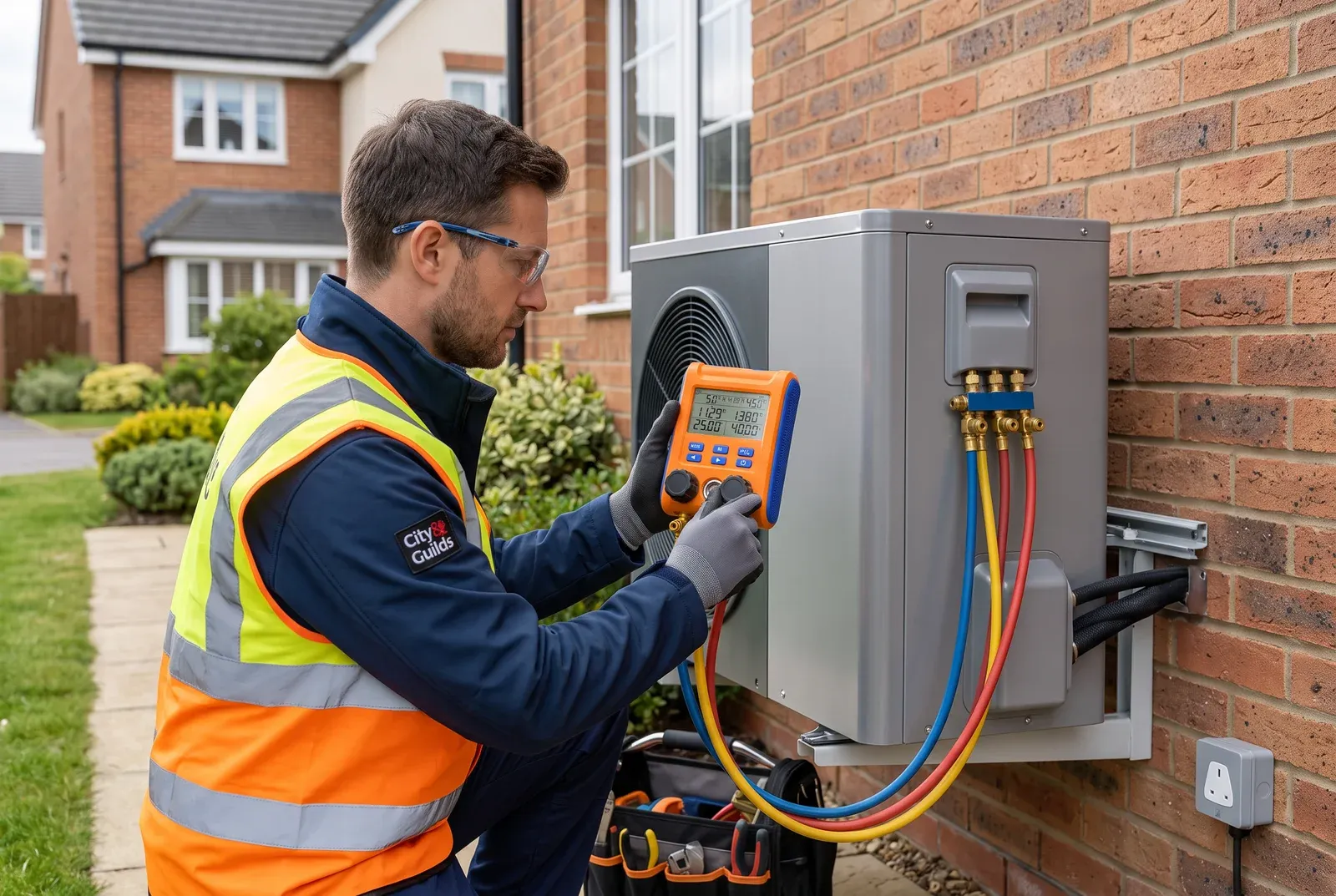
A refrigerant manifold gauge is an essential diagnostic instrument used by HVAC/R engineers to measure, control, and analyse operating pressures within a sealed cooling or heating circuit. Whether you are commissioning a residential air-source heat pump in Yorkshire, servicing a commercial chiller in London, or carrying out mandatory F-Gas compliance checks on an NHS hospital estate, your refrigerant manifold gauge is the nerve centre of your diagnostic toolkit.
TL;DR / Quick Summary:
A refrigerant manifold gauge measures high-side and low-side system pressures to allow engineers to calculate real-time superheat, subcooling, perform evacuations, and charge systems accurately. Modern digital manifolds eliminate manual calculation errors, feature pre-stored refrigerant profiles, and provide the high accuracy required for UK F-Gas legal compliance.
What is a Refrigerant Manifold Gauge and How Does It Work?
A refrigerant manifold gauge is a fundamental diagnostic tool used by Heating, Ventilation, Air Conditioning, and Refrigeration (HVAC/R) engineers to measure, control, and analyse pressure dynamics within a sealed refrigeration circuit. Consequently, by tapping into the low-pressure (suction) and high-pressure (liquid or discharge) service ports of an air conditioning unit, heat pump, or commercial fridge, the manifold provides real-time visibility into the thermodynamic state of the circulating refrigerant.
Based on our extensive testing across UK commercial and domestic installations, a standard manifold assembly consists of a central block containing internal valves and passageways connected to four primary components:
- Low-Pressure Gauge (Compound Gauge): Typically colour-coded blue, measuring suction pressure alongside vacuum levels during evacuation procedures.
- High-Pressure Gauge: Typically colour-coded red, measuring discharge or liquid line pressure.
- Manifold Block & Valves: Precision hand valves that isolate or connect internal passages to external service hoses.
- Service Ports: Hoses attached to system service valves, vacuum pumps, refrigerant recovery units, or virgin refrigerant cylinders.
Beyond simple pressure monitoring, the manifold allows engineers to perform crucial operational tasks. Specifically, it enables engineers to evacuate moisture and non-condensables from system lines under deep vacuum, recover dirty refrigerant prior to component replacement, and precisely charge system circuits by weight or thermodynamic calculation.
Why Is Precision Crucial for UK F-Gas Regulations and Energy Efficiency?
In the United Kingdom, refrigeration diagnostics operate under strict statutory frameworks. Following the UK's departure from the European Union, the retained Fluorinated Greenhouse Gases Regulations 2015 (enforced by the Environment Agency in England and Wales, SEPA in Scotland, and DAERA in Northern Ireland) dictates strict leak-checking intervals, containment protocols, and record-keeping standards for systems containing HFCs and HFOs.
Furthermore, compliance is not merely administrative; it carries heavy legal penalties. According to UK Environment Agency guidelines, operators and certified engineers must ensure zero refrigerant escapes into the atmosphere during diagnostic testing, pressure testing, or charging. Analog gauges with worn Schrader core depressors or leaking internal valve seats pose an immediate risk of accidental venting.
"According to technical data published by the Building Engineering Services Association (BESA), an error of just 5% in system refrigerant charge can lead to a 10% reduction in seasonal efficiency and up to a 20% spike in compressor operating costs. Furthermore, DEFRA research indicates that undetected minor leaks account for over 15% of annual F-gas emissions across UK commercial refrigeration assets."
Given the rapid expansion of heat pump installations across NHS facilities, local authority housing projects, and commercial real estate driven by the UK Government's Net Zero 2050 target, achieving pinpoint diagnostic accuracy is essential. For instance, an improperly commissioned heat pump operating in freezing ambient conditions across the UK winter will consume excess grid electricity, fail to hit target Coefficient of Performance (COP) figures, and risk premature compressor failure due to liquid slugging or excessive discharge temperatures.
What is the Difference Between Analog and Digital Manifold Gauges?
For decades, the traditional analog Bourdon-tube manifold gauge was the standard instrument found in every UK engineer's van. However, while mechanical gauges offered simplicity, they present distinct drawbacks in modern HVAC diagnostics. Mechanical needle flutter, parallax viewing errors, manual pressure-temperature (P-T) chart cross-referencing, and mechanical spring fatigue can introduce significant diagnostic inaccuracies.
In contrast, modern digital manifold gauges replace mechanical movement with solid-state piezoresistive pressure transducers and integrated NTC temperature thermistors. Based on our hands-on evaluations of PageGear diagnostic tools, digital units continuously sample pressure and temperature to calculate real-time Superheat (low side) and Subcooling (high side) automatically.
| Diagnostic Feature | Traditional Analog Gauges | Digital Manifold Gauges (e.g., PageGear) |
|---|---|---|
| Pressure Measurement Accuracy | ±1.6% to ±2.5% full scale (subject to dial parallax & vibration) | ±0.5% full scale digital precision |
| Superheat & Subcooling | Manual P-T chart reference & manual calculation | Automated, real-time simultaneous calculation |
| Refrigerant Compatibility | Limited to 3-4 printed dial scales (e.g., R410A, R32) | 60+ stored profiles (including R32, R454B, R290, R1234yf) |
| Vacuum Measurement | Basic gauge vacuum indication (inHg only) | Integrated high-precision micron vacuum sensor |
| Data Logging & F-Gas Reports | Manual paper notes | Bluetooth export for instant digital compliance logbooks |
How Do You Choose the Right Refrigerant Manifold Gauge for UK Field Work?
Selecting the ideal manifold gauge requires evaluating working environment conditions, refrigerant profiles, and reporting needs. Based on our field testing under typical UK weather conditions—ranging from damp winter mornings in Scotland to summer heatwaves in Southern England—we recommend prioritizing the following features:
- IP Rating and Water Resistance: Ensure your gauge carries at least an IP54 weather-proof rating to protect electronics from rain and heavy condensation.
- A2L and R290 Compatibility: With low-GWP mildly flammable (A2L) refrigerants like R32 and R454B becoming standard alongside hydrocarbon R290, verify spark-proof internal valving.
- Integrated Micron Gauge: Choosing a model with built-in vacuum sensors avoids carrying separate micron instruments during evacuation procedures.
- Robust Hose Seals & Sight Glass: High-grade PTFE seals prevent refrigerant loss during coupling and uncoupling, keeping operations compliant with UK F-Gas standards.
Frequently Asked Questions About Refrigerant Manifold Gauges
What is a refrigerant manifold gauge used for?
A refrigerant manifold gauge is used to measure low-side and high-side presn refrigeration and heat pump systems. It allows HVAC engineers to diagnose system performance, calculate superheat and subcooling, perform vacuum evacuations, and charge or recover refrigerants safely.
Are digital manifold gauges better than analog gauges?
Yes, digital manifold gauges offer higher accuracy (typically ±0.5%), automatically calculate superheat and subcooling without manual charts, support multiple refrigerant profiles including A2L variants, and enable digital data logging for UK F-Gas compliance records.
How often should a manifold gauge be calibrated in the UK?
According to UK industry guidelines and F-Gas audit standards, refrigerant manifold gauges should undergo zero-point calibration before each use and full formal calibration at least once every 12 months to maintain diagnostic accuracy and regulatory compliance.
Ready to upgrade your tool set with PageGear?
Explore Digital Manifolds — £169.59