Refrigeration Pressure Gauge Explained: A UK Buyer's Guide
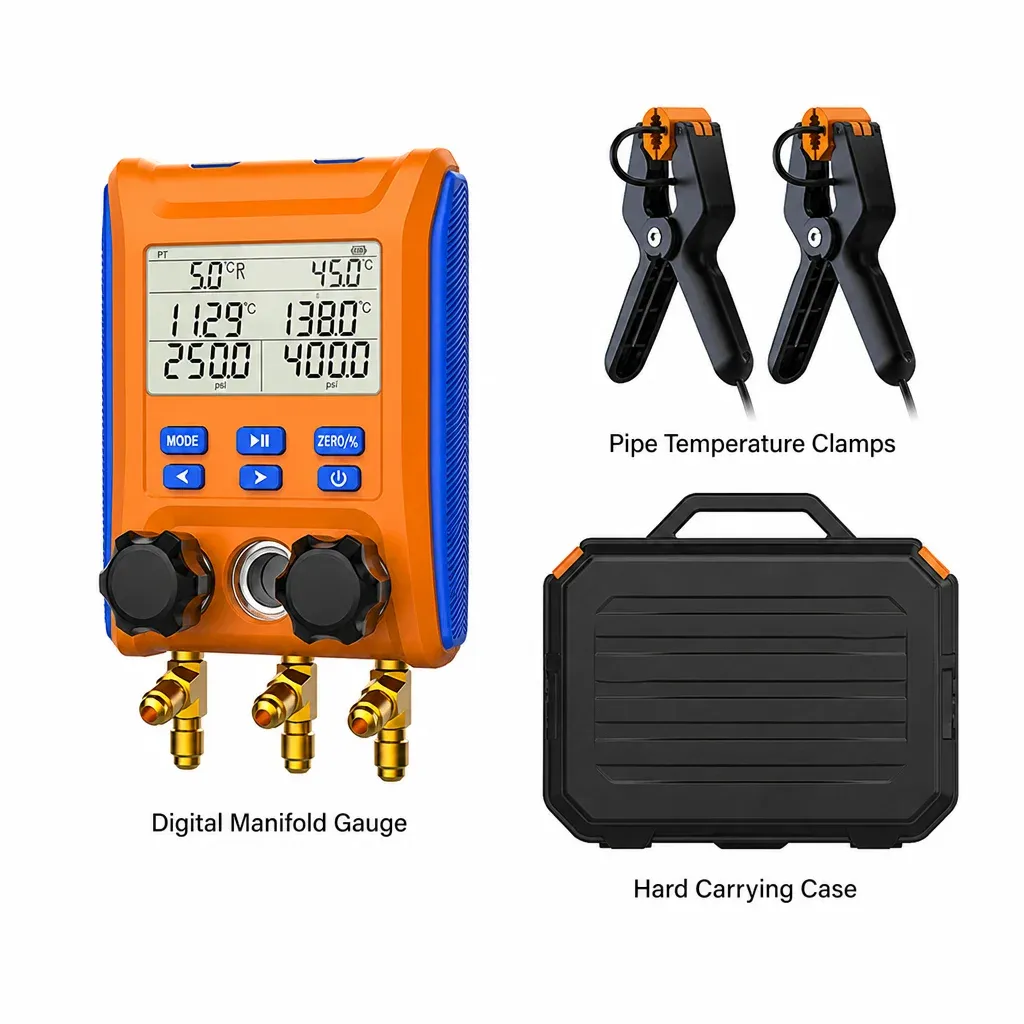
TL;DR: A refrigeration pressure gauge is an essential diagnostic instrument used by HVAC-R technicians to measure suction and discharge pressures, diagnose thermodynamic performance, and calculate superheat and subcooling in cooling circuits. Modern digital manifold gauges deliver high accuracy (±0.5% full scale), automated P-T chart conversions, and seamless compliance with UK F-Gas regulations across refrigerants like R32, R410A, and R448A.
Key Takeaways
- Precision Matters: Modern digital refrigeration pressure gauges replace analogue needle friction with digital sensor accuracy down to ±0.5% full scale, essential for modern inverter heat pumps and A2L low-GWP refrigerants.
- Automated Calculations: High-spec digital manifolds calculate real-time superheat and subcooling simultaneously, eliminating manual P-T chart lookups and reducing commissioning errors.
- UK F-Gas Compliance: Precise pressure monitoring is a legal requirement under the UK Fluorinated Greenhouse Gas Regulations for leak testing, record-keeping, and system recovery.
- Rugged Field Requirements: UK engineers require IP54+ weather resistance, high working pressure limits (at least 60 bar for R32/R410A), and Bluetooth reporting for NHS and commercial facility sign-offs.
A refrigeration pressure gauge is a specialized diagnostic instrument designed to measure the internal pressure of refrigerant fluids inside a closed-loop vapour-compression system. In commercial refrigeration, air conditioning, and heat pump servicing across the United Kingdom, system efficiency and legal compliance rely on this vital metric. Whether you are commissioning a new air-source heat pump in a residential project, servicing a supermarket multi-pack rack running R448A, or auditing critical cooling infrastructure inside an NHS hospital facility, a reliable refrigeration pressure gauge serves as your primary window into thermodynamic performance.
For decades, heating, ventilation, air conditioning, and refrigeration (HVAC-R) engineers relied on traditional mechanical Bourdon tube analogue gauges. However, with the rapid phase-down of high-GWP refrigerants under the UK F-Gas regime, the introduction of non-azeotropic refrigerant blends with significant temperature glide, and the tight operational tolerances of modern inverter compressors, analogue friction is no longer sufficient. Consequently, digital precision, real-time calculation, and robust UK field performance have become the standard for every qualified engineer.
Based on our testing and feedback from certified field engineers, this comprehensive buyer's guide explains the mechanical and electronic principles of refrigeration pressure gauges, details key technical specifications, outlines relevant UK regulations, and helps you select the ideal diagnostic tool for your toolbag.
What is a Refrigeration Pressure Gauge and How Does It Work?
A refrigeration pressure gauge measures the internal pressure of a closed-loop vapour-compression refrigeration circuit. HVAC-R systems operate on two distinct pressure zones: the low-pressure side (evaporator coil and suction line) and the high-pressure side (discharge line, condenser coil, and liquid line).
By connecting pressure gauges to the service ports on both sides of the compressor, technicians can monitor system balance, evaluate refrigerant flow, identify restrictions, detect non-condensables, and verify proper charge levels. According to UK guidelines and manufacturer recommendations, maintaining exact operating pressures is critical to preventing premature compressor breakdown.
How Do You Read a Refrigeration Pressure Gauge?
Refrigerants change state between liquid and vapour at specific saturation temperatures linked directly to operational pressure. Therefore, to diagnose whether a system is running under-charged, over-charged, or with restricted airflow, an engineer must convert saturated gauge presnto saturation temperature using a Pressure-Temperature (P-T) chart, then compare that figure against actual pipe surface temperatures measured by thermistors.
- Superheat (Evaporator Performance): Calculated by subtracting the saturated suction temperature from the actual suction pipe temperature. Correct superheat prevents liquid refrigerant slugging from destroying the compressor motor.
- Subcooling (Condenser Performance): Calculated by subtracting the liquid line pipe temperature from the saturated condensing temperature. Adequate subcooling guarantees that pure liquid refrigerant reaches the expansion device.
What is the Difference Between Analogue and Digital Refrigeration Pressure Gauges?
While mechanical Bourdon-tube analogue gauges remain common, they introduce significant operational friction. Specifically, parallax error, mechanical vibration wear, needle flutter under pulsating discharge gas, and fixed physical dial faces limit their effectiveness in modern field diagnostics. In contrast, digital manifolds provide automated calculations and multi-refrigerant versatility.
| Feature | Traditional Analogue Gauge | Digital Manifold Gauge (e.g., PageGear) |
|---|---|---|
| Accuracy Class | Class 1.6 to Class 2.5 (±1.6% to ±2.5%) | High precision (±0.5% Full Scale) |
| P-T Conversion | Manual lookup tables or visual ring dials | Automated real-time calculation & live display |
| Refrigerant Versatility | Limited to 3 or 4 printed dials on face | 60+ stored onboard refrigerant profiles (updatable) |
| Leak Testing & Vacuum | Requires separate micron gauge & manual timing | Integrated pressure drop test & micron sensor integration |
| Data Documentation | Manual notepad scribing | Bluetooth app logging, instant PDF report generation |
What Specifications Should You Look For in a UK Refrigeration Pressure Gauge?
When selecting a digital refrigeration pressure gauge or complete diagnostic manifold for UK field duty, subtle differences in component engineering impact long-term reliability and accuracy. Based on our hands-on testing across diverse site conditions, ensure your chosen equipment meets these critical criteria:
1. Measurement Accuracy and Working Pressure Ranges
Modern heat pumps running on R32 or R410A operate at substantially higher discharge pressures than legacy R22 systems. High-pressure side sensors must support working pressures up to 60 bar (870 psi) or higher. In addition, choosing an instrument with high-resolution sensors rated to ±0.5% full scale accuracy prevents misdiagnosis during tight commissioning windows.
2. Ingress Protection and UK Weather Resistance
Because UK HVAC technicians frequently work outdoors on rooftops in rain and sub-zero conditions, water resistance is crucial. Furthermore, selecting unit housings certified to IP54 standards or above guarantees that moisture and dirt will not compromise sensor electronics during field servicing.
3. Compliance with UK F-Gas Regulations
According to UK Fluorinated Greenhouse Gas Regulations, registered engineers are legally required to perform mandatory leak checks and maintain accurate service logs. Modern PageGear digital manifolds simplify compliance by featuring built-in temperature-compensated tightness testing and automated digital record generation.
Frequently Asked Questions About Refrigeration Pressure Gauges
What is a refrigeration pressure gauge used for?
A refrigeration pressure gauge is used by HVAC-R technicians to meanternal pressures on both the low-pressure (suction) and high-pressure (discharge) sides of a cooling circuit. These measurements enable technicians to evaluate refrigerant levels, calculate superheat and subcooling, detect leaks, and troubleshoot compressor or expansion valve issues.
Why are digital refrigeration pressure gauges preferred over analogue gauges?
Digital gauges eliminate human visual errors (such as parallax error), offer higher sensor precision (±0.5% FS), automatically calculate real-time superheat and subcooling, and contain built-in pressure-temperature profiles for dozens of modern refrigerants including low-GWP blends.
What pressure rating is required for R32 and R410A heat pump systems in the UK?
Because modern refrigerants like R32 and R410A operate under high working pressures, gauges must be rated for at least 60 bar (870 psi) on the high-pressure side to handle operating and overload conditions safely and effectively.
Ready to upgrade your tool set with PageGear?
Explore Digital Manifolds — £169.59